
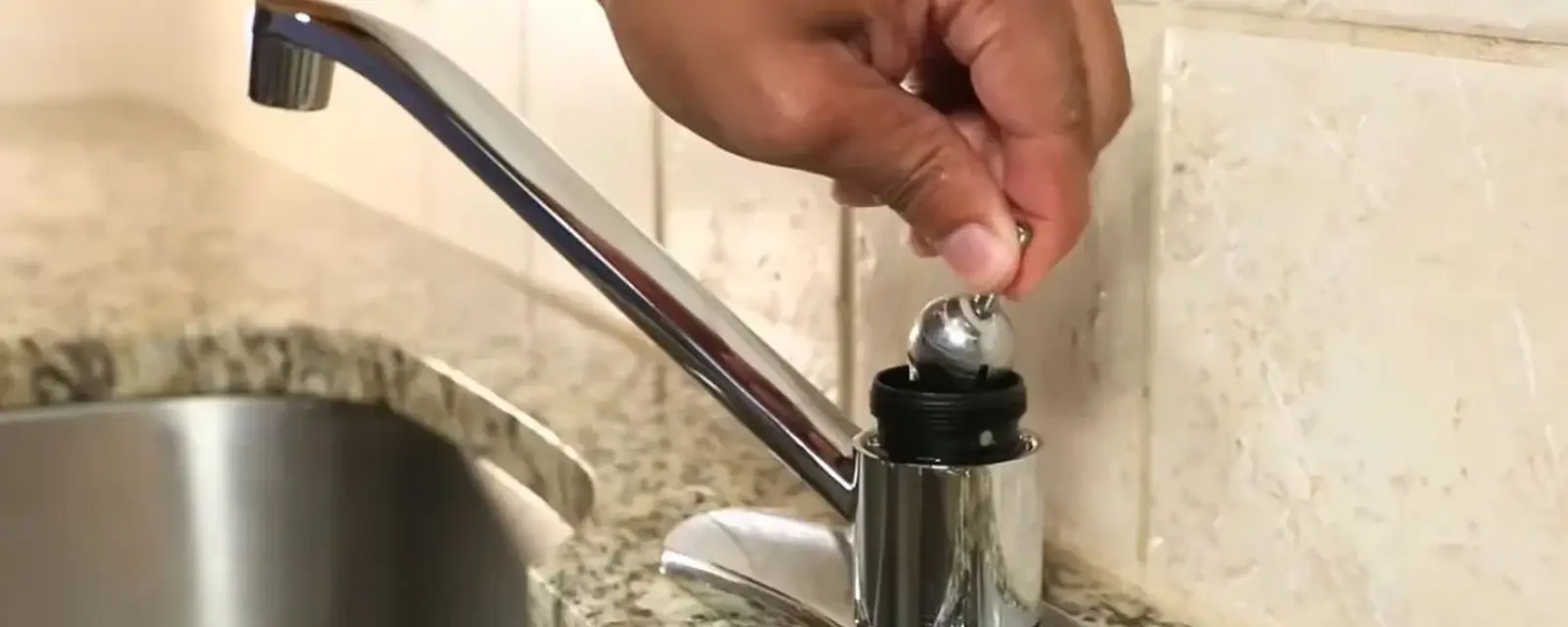
Under sink plumbing parts are the pipes, valves and connectors in the cabinet that bring water to the faucet and carry waste away. The main pieces are two shutoff valves, two supply lines, the drain tailpiece, the P-trap and the wall pipe. Knowing their names makes it much easier to find a leak or describe it on the phone.
This guide is written for Carteret, NJ homeowners and renters who have opened the cabinet, seen a tangle of pipes and wondered which part is dripping. We name each part, show what typically fails, and explain which fixes are reasonable to try and which ones call for a plumber.
The parts you will find under a typical sink
A bathroom or kitchen sink cabinet looks complicated, but it follows one logic. Clean water comes in from the wall through valves and flexible lines. Dirty water leaves through a curved trap and a wall pipe. Everything else is a connector or a seal.
- Shutoff valves (angle stops): two small valves on the wall, one for hot and one for cold.
- Supply lines: flexible braided hoses that run from each valve up to the faucet.
- Tailpiece: the straight pipe that drops from the sink strainer or drain.
- P-trap: the U-shaped bend that holds water and blocks sewer gas.
- Trap arm: the pipe that leaves the trap and goes into the wall.
- Slip nuts and washers: the rings and gaskets that seal each joint without glue.
What leaks, where, and what usually fixes it
Most under sink leaks come from a short list of parts. Find the wet spot, match it to a row and you will know whether to tighten, replace or call.
| Where the water shows | Likely part | Usual remedy | DIY level |
|---|---|---|---|
| Drip at the top of a supply line. | Worn washer or loose nut. | Tighten or replace the line. | Easy. |
| Wet cabinet floor under the trap. | Loose slip nut or cracked washer. | Re-seat the trap with a new washer. | Moderate. |
| Drip from the valve stem. | Packing nut or old valve. | Replace the shutoff valve. | Moderate to plumber. |
| Water from the faucet base, not the pipes. | Faucet seal, not a pipe part. | Faucet repair. | Plumber. |
| Damp wall behind the cabinet. | Wall pipe or hidden connection. | Leak check and repair. | Plumber. |
Always dry the area completely, then watch for a few minutes with a paper towel to find the true source.
Shutoff valves and supply lines: the parts that fail quietly
Braided supply lines are the usual source of a flooded cabinet. The metal braid hides a rubber tube that can age, split or loosen at the nut, and a burst line can empty a lot of water in a short time. Replacing them every several years is cheap insurance.
The small shutoff valves are also worth testing. Many have not been turned in years and may drip or stick when you try. If a valve will not close fully, you cannot isolate the sink for a repair, and that is often the day a plumber is called. Our faucet and sink repair team replaces both lines and valves during one visit.
How to find a slow leak in a few minutes
Slow leaks rot cabinet floors and grow mold long before anyone sees a puddle. This simple routine finds them.
Empty the cabinet.
Remove cleaners and bins, and wipe every pipe and joint with a dry towel.
Run the water.
Turn the faucet on, hot then cold, and touch each connection with a dry tissue.
Fill and drain the basin.
Fill the sink and pull the stopper. A leak in the trap or tailpiece shows up as the water rushes through.
Look again after an hour.
Check the tissue or towel. A tiny wet mark tells you which joint to tighten or replace.
Garbage disposals and dishwasher connections
A kitchen cabinet has extra parts. The disposal hangs below the sink and drains into the same trap, and a dishwasher hose often ties in through a small fitting. A leak from the disposal body usually means the unit has failed, while a drip from the hose clamp is a quick fix.
If the disposal hums, jams or leaks from the housing, our garbage disposal repair service can say whether it is worth repairing or replacing.
- Leak from the disposal bottom: unit failure, usually replace.
- Leak at the sink flange: putty or mounting issue.
- Drip at the dishwasher hose: clamp or fitting.
When to stop and call a plumber
Tightening a slip nut by hand is fine. Wrenching on a corroded metal valve or trap often makes things worse, because old pipe can crack or strip. If a part does not move easily, stop before you create a bigger leak.
Call us if you see mineral crust on the valves, green corrosion on copper, a valve that will not close, or water on the wall behind the cabinet. If a sink is draining slowly as well, the cause may be farther down, and our drain cleaning team can check the branch line.
Choosing replacement parts that last
When you replace parts, match the material to the pipe you have. Chrome or plastic traps are common under bathroom sinks, while brass lasts longer in a kitchen. Use new washers on every slip joint and hand tighten first, then add a quarter turn with a wrench.
Buy parts by size, not by looks. Bathroom sink drains are usually smaller than kitchen drains, and mixing sizes is a common reason a new trap leaks on day one. Bring the old part to the store or send us a photo.
Hard water, scale and what your Carteret sink parts go through
Carteret's tap water comes from Middlesex Water Company. In the utility's annual water quality report, hardness averages about 101 parts per million, roughly six grains per gallon, but readings across the system range from 12 to 314. A particular street can differ from the average, so read the report before guessing.
Hard water leaves mineral crust on faucet aerators, valve stems and supply line fittings, and that crust is what makes old valves stick and drip. If you see white or green buildup under your sink, plan to replace the valves and lines rather than repeat a quick tightening.
Rentals are common in Carteret, with about 45 percent of homes rented. Tenants should report a leak in writing, take photos of the cabinet and keep the date. A small leak that turns into a rotted cabinet is much easier to settle when the record is clear.
Source type: Utility annual water quality report. Sources: Middlesex Water Company annual water quality report.
Code and safety references for this topic
Replacement parts under a sink are covered by the plumbing subcode, N.J.A.C. 5:23-3.15, which adopts the National Standard Plumbing Code. Permit rules vary, so ask the Carteret construction office if you plan to move a drain.
Questions readers ask
What is the curved pipe under my sink called?
It is the P-trap. It holds a small plug of water that blocks sewer gas, and it is also where lost rings and hair collect, so it is the first place to check for a slow drain.
How often should supply lines be replaced?
There is no single schedule, but many plumbers suggest replacing braided lines every several years or whenever you replace a faucet. Replace sooner if you see rust, bulges or crusty fittings.
Why does my shutoff valve drip when I turn it?
The packing around the stem has worn or mineral scale has built up. Replacing the valve is usually better than adding thread tape, because a new valve also lets you shut off the sink for future repairs.
Does Carteret water cause more under sink corrosion?
It can add scale, depending on the hardness at your address. Middlesex Water's report shows a system range of 12 to 314 parts per million, so look for white crust on your own fittings to judge.
Do you handle under sink leaks in Woodbridge Township or Perth Amboy?
Yes. We dispatch from Carteret to Woodbridge Township and Perth Amboy, and the 24/7 line is open for leaks that cannot wait.