
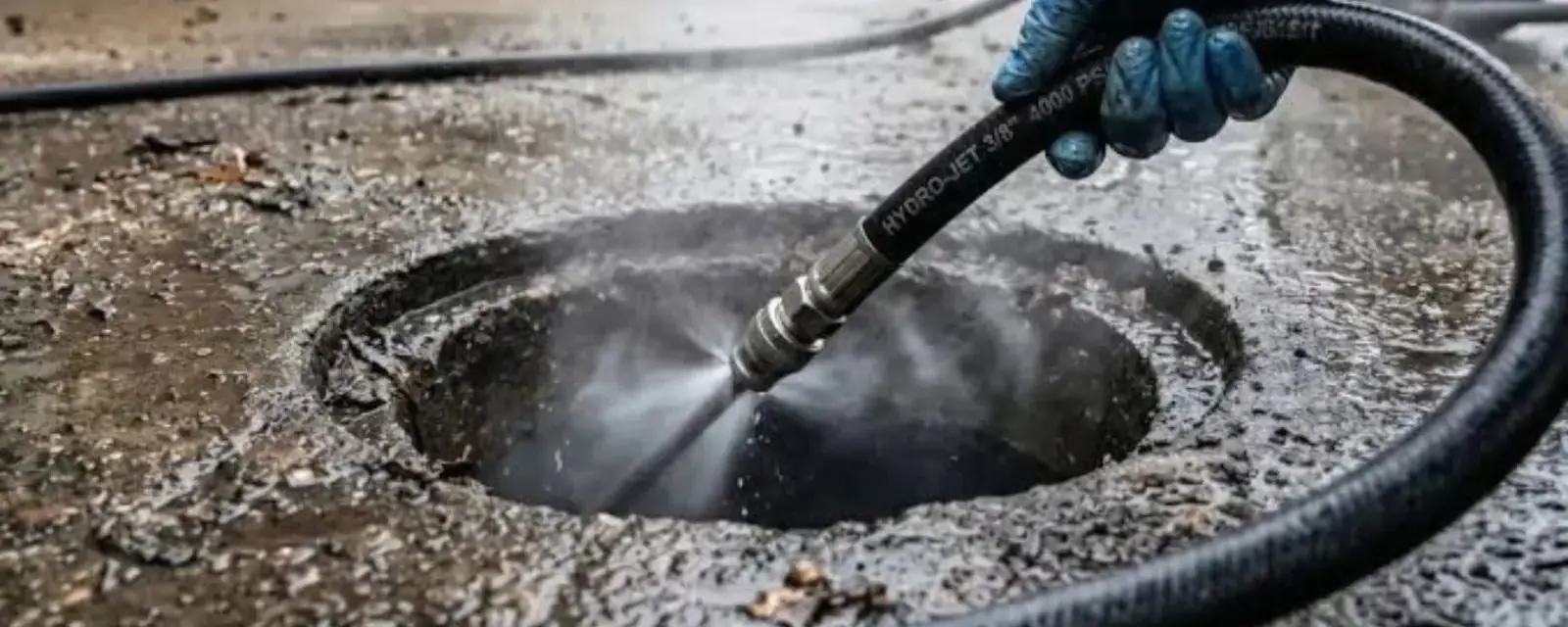
Hydro jetting in Carteret, NJ uses a hose with a nozzle that fires high-pressure water in every direction inside a pipe, scouring the walls clean instead of just poking a hole through the blockage. When a main line is gurgling, a kitchen line keeps clogging or a floor drain is rising, our 24/7 line is open, and we can often book a same-day visit.
Until we arrive, stop sending water down the drain, keep people away from any sewage on the floor and note which fixtures are affected. Jetting is the right tool for heavy buildup, but it is not the right tool for every clog, and we will tell you plainly which one your pipe needs after we look at it.
Main line backing up at night or on a weekend: what to do first
A main line that stops moving water can put wastewater on the basement floor within minutes, and it does not wait for business hours. Our dispatch line answers nights, weekends and holidays, so you never need to sit through a bad night with a flooding floor drain.
- Stop the washer, dishwasher, showers and every tap. Water you add has nowhere to go.
- Do not pour chemical opener into a backed-up line. It pools, burns skin and splashes on whoever works on the pipe next.
- Lift valuables and boxes off the basement floor, and keep children and pets out of the wet area.
- Tell the dispatcher which drains bubble or overflow first. The lowest fixture to back up usually shows where the blockage sits.
What a jetter does that a cable cannot
A drain cable is a spinning spring. It drills a hole through a clog, and water starts moving again, but the sludge that lined the pipe is still there. A hydro jetter pushes a flexible hose through the line and sprays water backward from the nozzle, which pulls the hose forward and strips the walls as it goes.
That difference explains why a line cleared by cable can slow again within weeks, while a jetted line often stays open much longer. The water carries the loosened debris out with it. For a line with years of grease, soap scale or silt, the cleaning job is the point, not just the opening.
Jetting, cabling or a camera: which one fits your drain
Many calls start with a request for jetting by name. The honest answer depends on what is in the pipe, so this table shows how we usually decide.
| What you notice | What is probably in the line | Likely first move |
|---|---|---|
| Kitchen line slows again a few weeks after clearing. | Grease coating the pipe wall. | Cable to open it, then jetting to scour it. |
| Several drains slow at once and gurgle. | Buildup narrowing the main. | Camera look, then jetting. |
| Floor drain rises when the washer drains. | Heavy buildup or roots in the main. | Jetting after confirming the pipe is sound. |
| Sewer smell with no visible backup. | Dried residue or a trapped section. | Jetting, then check the venting. |
| Backups in an old clay or cracked pipe. | Structural damage, not just buildup. | Camera first, jetting only if the pipe can take it. |
We confirm with a camera when we have any doubt, because water pressure belongs in a sound pipe.
Grease, scale and roots: three things jetting handles well
Grease is the most common reason we recommend a jetter. Cooking fat cools in the line, hardens against the wall and traps food scraps, so the pipe slowly shrinks from the inside. Hot, high-pressure water cuts through that coating far better than a cable can, which matters in restaurants and in kitchens that have been clogged repeatedly.
Scale is the hard mineral crust that forms inside older pipes, and roots are fine fibers that push into a joint and fill the pipe with a mat. A cutting nozzle can shred root hair and clear scale, but roots grow back if the joint stays open, so we point out when a repair is the lasting answer. Our sewer line repair crews handle that next step.
How a jetting visit runs from the first call
The order is the same every time, so you know what to expect.
Find the access point.
We locate a cleanout or the closest fixture opening so the hose can enter the right line.
Check before we blast.
Where the pipe is unknown or old, we run a camera first to make sure it is intact.
Jet in passes.
We push the nozzle forward, then pull it back while spraying, so the walls are scoured in both directions.
Prove it and report.
We run water through, look at what came out and tell you if roots, a low spot or damage showed up.
Why low-lying Middlesex County lines silt up and back up
Carteret sits on the Arthur Kill. The West Carteret sewer system was under a state sewer ban for 25 years, lifted June 26, 2009, because old pipes carried stormwater into the sanitary system and overloaded the pump stations. The borough has since rehabilitated the Roosevelt Avenue and Bergen Street pump stations with a $4.8 million NJ Water Bank loan.
What that means for you is simple. A backup that hits only your house is almost always in your private line, which jetting can clean. When the whole street backs up after a heavy storm, the public system may be involved, so report it to the borough as well and keep photos of the time and water level.
Sources: Borough of Carteret: West Carteret sewer ban lifted (2009). NJ Water Bank loan, Roosevelt Avenue and Bergen Street pump stations.
When we advise against jetting
Water pressure can make a weak pipe worse. A line with a collapsed section, a deep offset or crumbling joints can leak into the soil once it is pressurized, so a camera should come first. If the picture shows damage, we explain the choice between a repair and a careful cleaning, and a sewer camera inspection gives you the footage to judge it yourself.
We also decline to jet a line that has no safe access. If there is no cleanout and the only entry is through a toilet, we say so and add a cleanout first, because forcing a hose through a fixture risks the fixture and the floor.
What moves the price of a jetting job
We do not name a number for a pipe we have not seen. We give a clear price before work starts, and these are the things that change it:
- Length and size of the lineA short lateral takes less hose and time than a long run to the street, and larger pipes need more passes.
- How heavy the buildup isLight film clears quickly. Years of grease or scale may need several passes or a cutting nozzle.
- AccessA cleanout at the foundation is simple. No cleanout means extra labor to create safe access.
- Camera workA look before or after jetting is a separate step and tells us whether the pipe is sound.
- Time of the callNights, weekends and holidays are emergency visits and are priced as such, with the number given first.
Insurance often treats a gradual clog as maintenance, and sewer backup coverage is frequently an optional add-on, so read your policy. For a real number on your line, call (718) 412-8453.
Restaurants, landlords and shared lines
Kitchens that run every day put a lot of grease into a line, and a scheduled jetting visit can be cheaper than an emergency every few months. Our commercial plumbing team plans these visits around your service hours.
In a rental building with several apartments on one stack, tell us which units are affected. A clog that serves a whole building is a main line job, and clearing one unit's trap will not help. Port Reading, Avenel and Fords calls are common for this, and Avenel is among our nearer dispatches from the Carteret base.
Code and safety references for hydro jetting
Hydro jetting is a cleaning method and does not change the pipe, but anything we find that needs repair falls under the plumbing subcode, N.J.A.C. 5:23-3.15, which adopts the National Standard Plumbing Code. Call 811 before any digging, which is the national call-before-you-dig number.
Hydro Jetting questions from Carteret customers
Do you handle hydro jetting emergencies at night or on weekends in Carteret?
Yes. The line is staffed 24 hours a day, including nights, weekends and holidays, and we book same-day appointments when we can. Tell the dispatcher what is backing up so we can bring the jetter and a camera on the first trip.
Is hydro jetting safe for older pipes?
It depends on the condition of the pipe. Sound cast iron, plastic and copper handle it well, while cracked or collapsed clay does not. That is why we run a camera first when we are unsure.
How often should a restaurant line be jetted?
There is no single schedule. A busy kitchen with heavy frying may need it every few months, while a light-use line may go much longer. We look at the buildup and suggest an interval based on what we see.
Will jetting get rid of tree roots for good?
No. A cutting nozzle clears the roots in the pipe, but they return if the joint they entered is still open. A repair at the joint is the lasting fix, and we say so when the camera shows it.
Can jetting fix a sewer smell?
Sometimes. If the smell comes from dried residue in the line, scouring it helps. If the smell comes from a dry trap or a venting fault, jetting will not, so we check those first.
Do you serve areas near Carteret for hydro jetting?
We dispatch from Carteret to Port Reading, Avenel, Woodbridge Township, Fords and Perth Amboy. Calls from Woodbridge Township reach us through the same 24/7 line.