
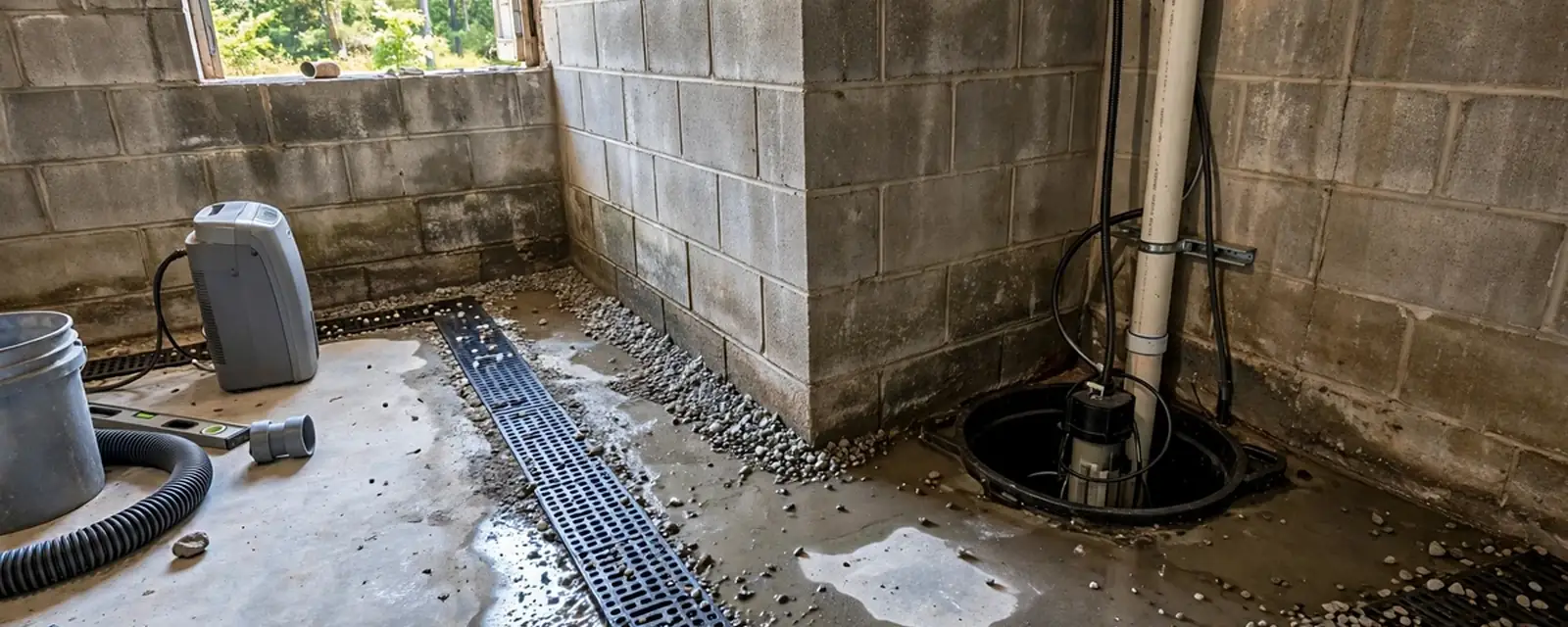
Basement waterproofing in Carteret, NJ is about finding where the water enters and then deciding whether to seal it, drain it or pump it out. A wet basement in a borough on the tidal Arthur Kill and the Rahway River is not unusual, and the right fix depends on the source.
If water is coming in now, shut off power to the wet area and call our 24/7 line. For slower seepage, this page explains the common causes and how we check them, so you can plan the work before the next storm.
Four ways water gets into a basement
Basement water almost always comes from one of four paths, and waterproofing only works when it matches the real one. Spending money on wall sealant when the water is coming through a floor drain will not help.
A short inspection after rain, with a dry paper towel taped to the wall and a flashlight at the floor joints, tells us a lot about which path you have.
- Groundwater pressure pushing through the floor and wall joints.
- Surface water running against the foundation because of poor grading or gutters.
- Sewer or storm drain backup coming up a floor drain.
- Plumbing leaks from a supply line, water heater or sump pump discharge.
Matching the fix to the cause
A good plan starts with the cause. This table shows the usual pairing and what each fix cannot do.
| Water source | Typical sign | Common fix | Limit |
|---|---|---|---|
| Groundwater through floor. | Damp slab, water at floor and wall joint after rain. | Interior drain and sump pump. | Does not stop water entering. |
| Surface runoff. | Wet near one wall after storms. | Downspout extensions, regrade, gutter repair. | Needs yard access. |
| Sewer backup. | Floor drain bubbles or overflows. | Backwater valve, line cleaning. | Public side needs the borough. |
| Plumbing leak. | Constant wet spot, high water bill. | Repair the pipe or fixture. | Hidden pipes need detection. |
| Cracks in the wall. | Line of damp that follows a crack. | Crack injection, exterior seal. | Moving cracks may return. |
Flooding history that shapes Carteret basements
Carteret's land is low and close to tidal water. Hurricane Sandy in October 2012 produced up to 10 feet of flooding at the Public Works building and Waterfront Park, and about 200 homes were seriously damaged. If your house was among those hit, ask us to check any repairs made then.
Heavy rain is a separate problem. The borough's Bergen Street area near the Arthur Kill floods in storms, and a 2024 state grant is funding a bioretention project there, plus floodproofing of the Bergen Street sewer pump station. West Carteret lived under a sewer ban for 25 years until June 26, 2009, because stormwater overloaded the system. In practice, if several homes on your block flood together, report it to the borough as well as calling us.
- Backup at only your house: the private lateral is the likely cause.
- Backup across the block: report it to public works and keep photos with times.
- Floor drain bubbling first: it is the lowest point in the system, so act fast.
Sources: Borough of Carteret: Hurricane Sandy damage report. NJ Water Bank loan, Roosevelt Avenue and Bergen Street pump stations.
Sump pumps, the first line of defense
A sump pump moves groundwater out of a pit before it reaches the floor. In low parts of the Woodbridge Township area, where much developed land sits only a few feet above sea level, a pump may run often during storms. A backup pump or a battery supply is worth considering, because storms are also when the power fails.
We test the float, check valve and discharge line, and we explain whether a single or dual pump makes sense for your pit. See sump pump repair if yours already runs poorly. If the pit is dry and the basement is still damp, the cause may be elsewhere.
What to do before we assess a wet basement
Standing water in a basement can hide live electrical hazards, so safety comes before cleanup. These steps apply whether the water is a puddle or several inches deep.
- Stay out of standing water if outlets, cords or the panel could be underwater, and call 911 if anyone could be in danger.
- Switch off power to the basement only if you can reach the breaker without stepping in water.
- Move stored items up off the floor and photograph the water line for your insurer.
- Do not run a vacuum or pump from an outlet that is wet or near the water.
- Call the 24/7 line and describe where the water is entering.
How we approach a wet basement
The sequence is built to find the cause before anyone sells you a system.
Look at the water.
We note where it enters, how fast, and whether it follows rain.
Test the plumbing.
Supply lines, heater, floor drains and the sump are checked first.
Check the outside.
Gutters, downspouts, grading and window wells are looked at.
Propose the fix.
You get a plain list of options, with what each one will and will not stop.
Hidden leaks that look like groundwater
Not every wet basement is a flood problem. A pinhole leak in a supply line or a failing water heater can keep a corner damp for months. A water bill that creeps up with no change in use is the best clue.
Our leak detection service finds the source with sensors and listening gear, so we do not open more wall than needed. If the leak is on the pipe from the street, a water service line repair may be the answer instead of waterproofing.
What changes the cost of waterproofing
Scope varies widely, from a sump pump swap to a full interior drain system. We state a clear price before work starts. The factors are:
- Water sourceSurface drainage fixes cost less than interior drain systems or exterior excavation.
- Size of the areaLinear feet of wall and floor decide materials and labor.
- AccessFinished basements, tight crawl spaces and obstructed walls take longer.
- Pump needsOne pump, two pumps, battery backup and discharge routing change the scope.
- PermitsSome work needs permits, and rules vary, so ask the borough construction office.
Homeowners insurance usually excludes groundwater seepage and may treat sewer backup as an optional add-on. Flood coverage is separate. Check your policy. For your real number, call (718) 412-8453.
What we do not do
We are plumbers, not foundation contractors. If your wall has structural cracks, bowing or a settling footing, we say so and suggest an engineer. We do not promise a permanently dry basement, because that depends on the cause, the ground and the weather.
What we can do is stop the plumbing sources, protect against backup and keep your pump and drains working. For help in nearby Port Reading, where the ground is low beside the Arthur Kill, we use the same inspection steps and answer the same emergency line.
Code and safety references for basement waterproofing
Interior drainage and sump work follow the plumbing subcode, N.J.A.C. 5:23-3.15, which adopts the National Standard Plumbing Code. Permit rules vary, so ask the Carteret Building, Construction and Land Use Department. Hurricane Sandy's storm surge in October 2012 showed how high water can reach on Carteret's waterfront.
Basement Waterproofing questions from Carteret customers
What is the first thing to do if my basement is flooding?
Stay out of standing water if it may be near outlets, switch off power to that area from a dry spot, and move valuables up. Then call our 24/7 line so we can check pumps, drains and plumbing.
Why does my basement floor drain bubble during heavy rain?
The floor drain is the lowest point, so it shows overload in the line first. It may be a private blockage or the public system, which is why neighbors' reports matter.
Do you install interior drainage systems?
We handle pump pits, drain lines and discharge. For large excavation or structural work we recommend a specialist contractor and explain why.
Will a sump pump keep my basement dry?
It removes groundwater that reaches the pit. It does not stop surface water or sewer backup, so we check the other paths too.
Is basement flooding covered by insurance?
Often not for groundwater or flood. Sewer backup may need an add-on. Read your policy or ask your insurer, because wording varies.