
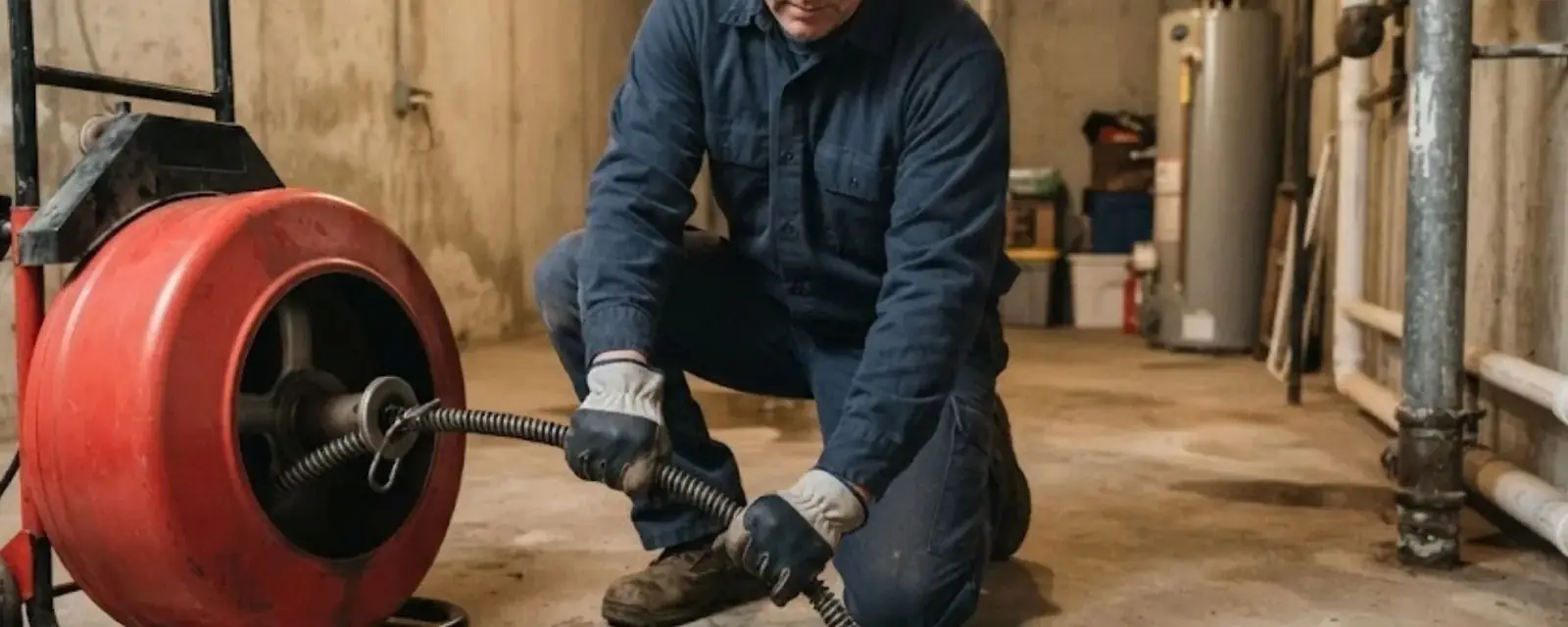
A clogged toilet vent pipe can make a toilet gurgle, flush slowly, hiss or leave a sewer smell, even when the drain below looks clear. The toilet vent is the pipe that lets air into the drain so a flush pulls waste away in one smooth rush. Block it and the flush loses its pull.
This guide helps Carteret, NJ homeowners tell a vent problem from a true toilet clog, explains what usually blocks the vent, and shows how a plumber finds and clears it. If sewage is rising in the tub or floor drain, stop reading, stop using water and call our 24/7 line.
What a clogged toilet vent looks like
A toilet with a blocked vent behaves differently from one with a blocked drain. A drain clog fills the bowl. A vent clog changes the sound, speed and strength of the flush. You may notice that the problem comes and goes with the weather or with how many fixtures are running.
- A bubble or burp of air rising in the bowl after a flush.
- A flush that starts strong and then slows or leaves a low water level.
- A gurgle in the toilet when the shower or washer drains.
- A faint sewer smell near the toilet, even when it is not in use.
- A bowl that refills with a hissing or sucking noise.
Toilet clog, vent clog or main line? Telling them apart
Plumbers sort these problems by how many fixtures are affected and what the toilet does. Use this table to describe what you see.
| Symptom | Toilet clog | Vent clog | Main line |
|---|---|---|---|
| Bowl fills and will not drop. | Common. | Rare. | Possible. |
| Gurgle with other fixtures. | Rare. | Common. | Common. |
| Slow flush with clear drain. | Rare. | Common. | Possible. |
| Basement floor drain backs up. | No. | Rare. | Common. |
| Plunger clears it fully. | Yes. | No, symptom returns. | No. |
If more than one column fits, a camera inspection avoids guesswork.
What blocks a toilet vent in the first place
A toilet vent travels up inside a wall and out through the roof. The most common blockage is outside debris at the top, such as leaves, a nest or ice. Inside the wall, an old metal vent can corrode or collapse, and a vent that was altered during a remodel can be kinked or capped.
A bathroom vent that ties into the stack with too long a run can also let waste or condensation build up. These cases show up as a toilet that has always been a little slow, rather than one that suddenly changed.
How we diagnose and clear a toilet vent
We work from the simple to the specific so you do not pay for a repair you do not need.
Listen and test.
We flush the toilet, run other fixtures and note which sounds appear, then test the toilet with measured water.
Check the roof opening.
We look for debris or ice at the vent cap and clear anything we find from the top.
Run a cable or camera.
If the opening is clear, we feed a small cable or camera through the vent to find a blockage or collapse.
Confirm the flush.
After clearing, we flush repeatedly and run neighboring fixtures to confirm the air path is working.
Do not ignore a bubbling or smelly toilet
A blocked vent can pull the water seal from nearby traps, which lets sewer gas into the room. A toilet that sucks air and smells is telling you the system cannot breathe. It may still flush, but it will not hold up to heavy use or a storm.
Keep the bathroom door closed, avoid running the washer at the same time as a shower and book a visit. If the toilet overflows or sewage appears at a floor drain, switch to emergency mode and call the 24/7 line.
- Do not use chemical cleaners in a gurgling toilet.
- Do not climb on a wet or icy roof to check the vent.
- Turn off the toilet shutoff valve if it begins to overflow.
When a vent clog and a drain clog show up together
It is common for both problems to exist. A partly blocked main line holds water in the pipe, and the same pipe can make vent symptoms worse. If your toilet keeps backing up after a vent is cleared, the line below needs attention.
Our sewer line cleaning service clears main-line buildup, and our toilet repair team resets, reseals or replaces the fixture if the toilet itself is at fault. A camera inspection shows whether a bellied section or roots are the true cause.
Roof access and cold weather
Winter is a common time for vent trouble. Warm, moist air rising through the pipe can freeze on the rim at the roof and slowly close the opening with frost. The symptoms appear on the coldest mornings, then ease by afternoon, which is a classic sign of an icing vent.
A larger pipe at the top is the usual fix in very cold climates, and a plumber can advise whether that makes sense for your house. Never chip at ice on a roof yourself. A fall is a far worse problem than a gurgling toilet.
Why plunging and chemicals make a vent problem worse
A plunger can force air and water around the system, but it does not open a blocked vent. Repeated plunging can loosen the wax seal under the toilet and leave a leak behind. Chemical cleaners add the risk of burns and do nothing for a stoppage in the air path.
If a plunger gives only a short relief and the gurgle returns, stop and describe the pattern to the plumber. That pattern is one of the most useful clues we have, and it often saves a long search.
Storm backups, pump stations and your toilet
West Carteret lived under a state sewer ban for 25 years, lifted on June 26, 2009. The cause was an old sewer system over capacity, with sanitary and stormwater pipes interconnected so that heavy rain overloaded the pump stations. The borough has since rehabilitated the Roosevelt Avenue and Bergen Street pump stations with a $4.8 million NJ Water Bank loan closed in October 2020.
For your toilet, this gives a useful test. If your toilet gurgles only during or right after heavy rain and neighbors report similar trouble, the cause may be in the public system and not your vent. If the problem follows your own water use, check the vent and house drain first.
In either case, keep a note of the dates, weather and photos. That record helps us explain the cause and helps you if you need to report a street-wide issue to the borough.
Source type: Borough sewer ban announcement and state financing announcement. Sources: Borough of Carteret: West Carteret sewer ban lifted (2009). NJ Water Bank loan, Roosevelt Avenue and Bergen Street pump stations.
Code and safety references for this topic
Vent piping follows the National Standard Plumbing Code that New Jersey adopts through N.J.A.C. 5:23-3.15. Do not climb onto a roof to clear a vent yourself, and ask a licensed plumber to check it.
Questions readers ask
How do I know the toilet vent is clogged and not the toilet?
A toilet clog fills the bowl and a plunger usually clears it. A vent clog makes the toilet gurgle, flush slowly or smell, and the symptom returns after plunging.
Can a blocked vent damage my toilet?
Not directly, but it can pull water out of traps and strain the flush. The bigger risk is sewer gas and backups. Fix it before it becomes a full overflow.
Is a vent clog a repair the landlord should handle?
Usually yes, since vents are part of the building plumbing. Tell the owner in writing and note the symptoms and dates.
Why does my toilet gurgle only when it rains in Carteret?
Heavy rain can overload the public system in some areas, as West Carteret's sewer ban history shows. If neighbors have the same issue, report it to the borough as well as to us.
Do you clear vents in Avenel and Woodbridge Township?
Yes. We dispatch to Avenel and Woodbridge Township and keep the 24/7 line open for backups.