
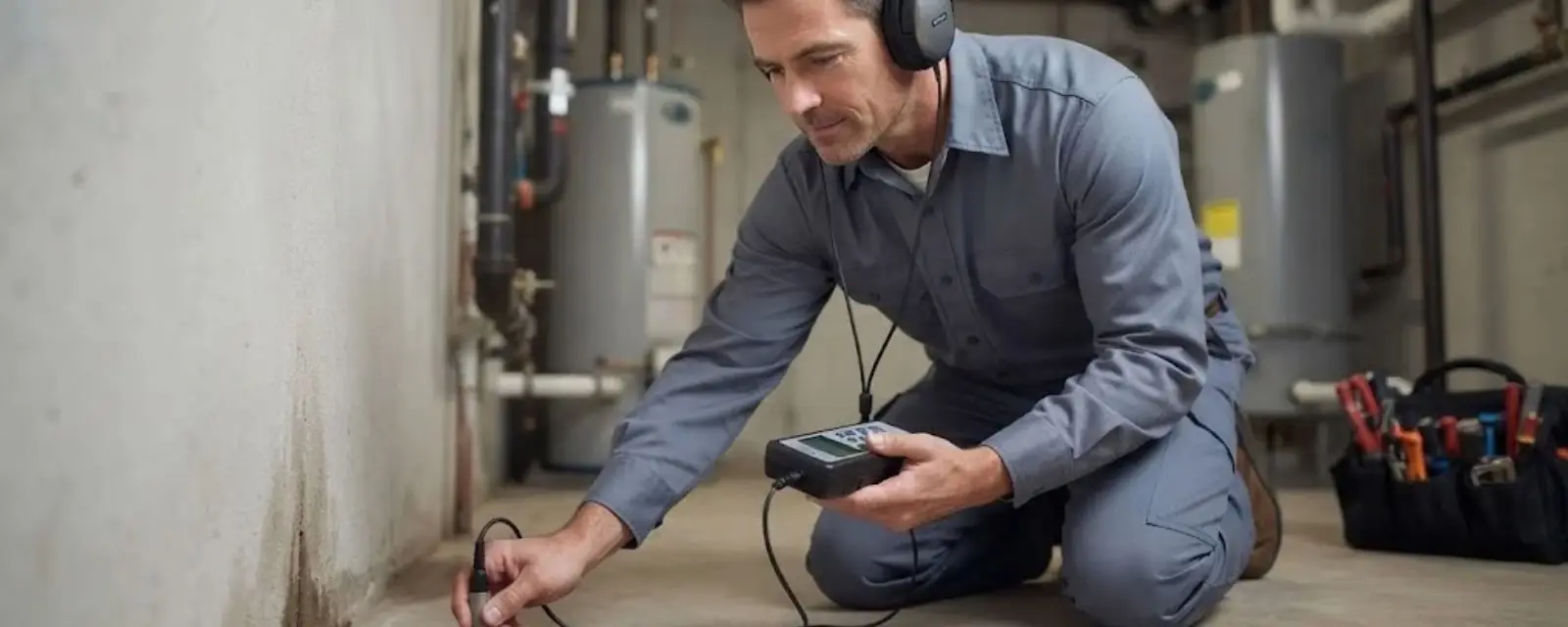
An acoustic sensor finds a hidden water leak by listening for the sound pressurized water makes when it escapes from a pipe. The plumber places a sensitive microphone on the floor, wall or pipe and listens for the hiss or hum that gets louder near the leak. For Carteret, NJ homes with a mystery wet spot or a high water bill, it can pinpoint a leak without tearing out walls.
This guide covers how the tool works, what it cannot hear, and what to try first. If you have an active leak that is spraying or flooding, shut the water at the main and call our 24/7 line.
How acoustic leak detection works
Water leaking out of a pressurized pipe vibrates the pipe and the material around it. A ground microphone or contact sensor picks up those vibrations, and a handheld unit filters out background noise so the leak sound stands out.
The plumber moves the sensor along the suspected line and watches for the point where the sound is loudest. That spot, marked on the floor or wall, is where we open the surface, which keeps the repair small.
- Works best on pressurized supply lines.
- Most useful when the house is quiet and nothing is running.
- Hardest on plastic pipe, which carries sound poorly.
- Often paired with other methods to confirm the result.
Acoustic detection compared with other leak-finding methods
No single method finds every leak. Plumbers choose, and often combine, tools based on pipe material, location and how the leak behaves.
| Method | Best for | Limits | Opens the wall? |
|---|---|---|---|
| Acoustic listening. | Pressurized lines in slabs, walls and yards. | Noisy sites, plastic pipe, very small leaks. | No. |
| Thermal imaging. | Hot water lines and wet areas. | Needs a temperature difference. | No. |
| Moisture meter. | Confirming wet drywall or flooring. | Shows moisture, not the source. | No. |
| Pressure test. | Deciding which section of pipe is leaking. | Does not give an exact point. | No. |
| Tracer gas. | Leaks that make little sound. | Needs special equipment. | Sometimes. |
| Camera inspection. | Drain and sewer line problems. | Only for drain lines. | No. |
A moisture reading alone cannot tell you whether the water comes from a supply line, a drain or a roof.
What happens during a leak detection visit
A visit follows a clear order, and each step narrows the area before any cutting.
Check the meter.
With everything off, we see whether the meter still moves, which confirms a leak.
Isolate.
We close valves section by section to find which part of the system is losing water.
Listen and trace.
The acoustic sensor is moved along the likely path until the sound peaks.
Confirm and mark.
A second method confirms the spot, then we mark it and discuss the repair.
What to do when you suspect a hidden leak
Hidden leaks give hints before they cause damage. The most reliable is a water meter that keeps moving when every fixture is off. Others are a sudden jump in your bill, a damp patch on a floor or wall, a musty smell, or the sound of water running when nothing is in use.
On a slab, a warm spot on the floor can point to a hot water line leaking underneath. In a basement, rust stains or peeling paint near a pipe are clues. Act on these early, because a small leak often becomes a larger repair.
Write down the date you first noticed each sign and take a photo of the meter. A short record helps the technician decide where to listen first, and it helps your insurer understand how long the problem has run.
- Meter moves with all water off.
- Bill rises with no change in use.
- Damp, warm or discolored floor, wall or ceiling.
- Sound of running water in a quiet house.
What acoustic sensors cannot do
A sensor cannot hear a leak that makes no noise. Very small drips, leaks in drain pipes that are not under pressure, and leaks in plastic pipes can be quiet. Traffic, appliances and running water nearby can also mask the sound.
That is why we confirm with a second method, and why you may be asked to turn off appliances and keep the house quiet. Our leak detection service uses more than one tool and we tell you honestly if the answer is uncertain.
How to help the technician hear the leak
A quiet house makes a big difference. Turn off the washer, dishwasher, ice maker and humidifier, and ask neighbors to avoid running heavy equipment during the test if you can. Even a ticking furnace can blur the signal.
Tell us where you saw the stain, where the meter reads high and when you first noticed the problem. A short history lets us start listening in the right place rather than sweeping the whole house. If the leak is outside, mark any sprinkler lines and buried utilities, and remember that 811 is the national call-before-you-dig number if digging is likely.
After the leak is found
Once the source is marked, the repair depends on what is leaking. A leaking fitting may take an hour to fix, while a pinhole in a buried line may need a section replaced. A failing service line is a bigger project and is covered by our water service line repair team.
If walls are already wet, tell your insurer promptly and take photos. Coverage varies by policy and by whether the damage was sudden, so ask your insurance company before assuming anything.
Water service lines, meters and the street work in Carteret
Middlesex Water Company supplies Carteret, and its RENEW 2023 project replaced about 26,000 feet of main along with service lines, valves and hydrants in Carteret and part of Port Reading. Under its Knocking Out Lead program, lead or galvanized steel service lines were replaced with copper, including customer-owned portions, at no direct cost to the owner or tenant.
Meters are also being moved from inside homes to exterior below-ground pits over time. That moves the utility's connection point outside, but the pipe from the pit to your house is still yours. If a meter keeps moving with everything off, the leak could be on that private side, which is where an acoustic sensor works well.
Customers in Port Reading and Avenel who saw main work on their street can also ask us to check for loosened debris or new leaks at the connection.
Source type: Utility project announcement and annual water quality report. Sources: Middlesex Water Company: $11.1 million RENEW project in Carteret and Port Reading. Middlesex Water Company annual water quality report.
Code and safety references for this topic
Leak repairs found by sensors follow the National Standard Plumbing Code that New Jersey adopts through N.J.A.C. 5:23-3.15. Middlesex Water's customer line is 800-549-3802 if a meter reading suggests a leak on the utility side.
Questions readers ask
Is acoustic leak detection accurate?
It is accurate when the leak makes enough sound and the site is quiet, and it narrows the search to a small area. We confirm with a second method before cutting.
Will you have to break my floor or wall?
Only at the marked spot, and only after the leak is confirmed. The purpose of detection is to keep the opening as small as possible.
Can a smart water sensor replace a plumber?
Smart sensors can alert you to moisture or flow, but they do not locate the leak or fix it. They are a useful early warning and a good complement to a plumber's tools.
Do you find leaks in Woodbridge and Fords homes?
Yes. We serve Woodbridge Township and Fords from our Carteret base and book same-day appointments when available.
My Carteret street had water main work. Could that cause a leak in my house?
It can loosen sediment and, rarely, disturb a connection. After main work, run cold taps, check the meter with everything off and call us if it keeps moving.